

RPL students to host a thrifted clothing fashion show - Central Michigan Life |
- RPL students to host a thrifted clothing fashion show - Central Michigan Life
- Beyond recycling: Redesigning the business of fashion with circularity - GreenBiz
- How Much Fashion Is Too Much Fashion at Work? - The Wall Street Journal
- The Met announces time-travelling theme for 2020 fashion exhibition - Dezeen
- Prince Charles Partners with the Yoox Net-a-Porter Group on a Sustainable New Fashion Collection - TownandCountrymag.com
| RPL students to host a thrifted clothing fashion show - Central Michigan Life Posted: 12 Nov 2019 09:25 AM PST 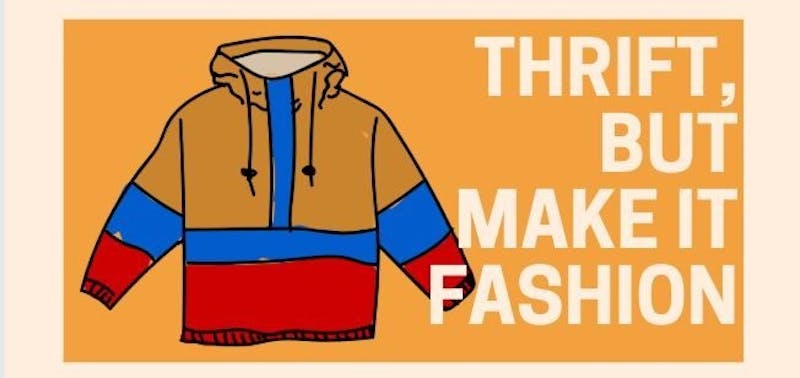 Recreation, parks and leisure services administration students are hosting a thrifted clothing fashion show for their RPL 430 course. The Thrift, but Make it Fashion: Charity Fashion Show takes place 7-9 p.m. Tuesday, Nov. 13 at the PohlCat Golf Course, located at 6595 E Airport Rd. "The show will include door prizes, food catered by Mountain Town (Station), as well as a performance by the improv group Hypothetical Fistfight," said Rochester Hills junior Amanda Lewis. Tickets for the event can be for $10 purchased in advance online or through Venmo, by sending money to @TBMIF. Tickets will be sold at the door for $15. All proceeds and thrifted outfits will be donated to the Isabella County Restoration House after the event. "The purpose of the event is to provide quality entertainment, bring the community together, promote sustainable fashion, and of course support the Isabella County Restoration House," Lewis said. "Our RPL 430 mission is to execute a successful fashion show for the Mount Pleasant community in order to promote sustainable fashion, and develop community connections while supporting a local cause."  |
| Beyond recycling: Redesigning the business of fashion with circularity - GreenBiz Posted: 13 Nov 2019 12:00 AM PST  This article is sponsored by Lenzing. The recent United Nations Climate Action Summit recorded an unprecedented level of commitment from the private sector, from finance to fashion. As the discussion on climate change takes center stage, the environmental credentials of the fashion business once again have been brought to light. The fashion industry, with its complex supply chains and energy-intensive production processes, contributes 10 percent of global greenhouse gas emissions. Skin-deep and short-term promises are no longer sufficient to put the sector back on track. It is time for brands to make fundamental and long-term commitments to redesign and rethink their textile value chain: substituting the linear "take-make-waste" operations with circularity initiatives. According to the Ellen MacArthur Foundation, a circular economy, as opposite to linear economy, is based on the principles of designing out waste and pollution, keeping products and materials in use and regenerating natural systems. Why care about circularity?Sustainability is becoming the next major battlefield for the fashion industry and disregarding this fact may cost the brand's reputation, businesses and relevance. According to the 2018 State of Fashion report by McKinsey and the Business of Fashion, 66 percent of millennials globally are willing to spend more on brands they consider sustainable. Embracing and investing in circularity is a key aspect of what makes a brand's sustainability commitment more convincing to consumers, as it offers transparency and identification on how well-managed your supply chain is and ultimately how ethically sourced your products are. As the impact of the fashion industry to the environment becomes more apparent, consumers are exploring using more second-hand or recycled products. Currently valued at $24 billion, the global secondhand market is predicted to grow to $64 billion by 2028 (automatic PDF download), 1.5 times larger than the predicted value of the fast fashion market — $44 billion — for the same period. International brands such as Zara and H&M are offering collection and recycling programs, allowing shoppers to drop off garments that they no longer use. These programs are also useful communication channels between consumers and brands to showcase purchase preferences, which provide valuable insights for brands to design future fashion collections. With an emphasis on innovation, the circular economy also offers opportunities that can help the fashion industry across all segments to respond to new customer demands while pursuing new growth opportunities.What else beyond recycling?When it comes to sustainable initiatives from brands, many still focus largely on one-off campaigns, such as recycling programs or sustainable capsule collections for a certain period of time. While these efforts are encouraging and worth celebrating, they are by no means enough. What the industry needs is a fundamental redesign: shifting from a linear model towards a reuse-based model. The most important element for circularity comes down to product end-of-life. Other than simply engaging in recycling, brands should seek to optimize the circularity of the raw materials in their products and be careful in examining the level of sustainability of the recycling process itself. This involves a clear understanding on the materials you use in the supply chain and how are they sourced and produced. The process of switching to a restorative and regenerative supply chain starts at the very beginning of garment production by understanding your supply-chain partners. For example, when adopting recycled materials, it is important to know how sustainable the fiber-recycling process is and compare that to the energy consumption level for taking on new raw materials. Water usage and energy consumption are other important indicators to decide whether the recycling process is sustainable. After getting hold of the environmental credentials of individual suppliers, it will be easier to shift away from polluting operators to eco-friendlier ones. Ideally, a closed-loop production process can ensure that materials are not a burden to the environment. For instance, Lenzing's Refibra technology, operated based on the award-winning closed-loop production process which recycles textile waste into Tencel-branded lyocell fiber, offers a trustworthy option for brands interested in sourcing recycled fibers. Fiber transparency is another important benchmark in determining circularity, allowing brands and consumers to examine the level of circularity and sustainability in supply chains. This means that in addition to betting on the most sustainable fiber, brands should look for fibers with clear identifications on sourcing and production, which are reliable proofs of environmental credentials. With more brands committing to circularity, new sustainability standards can be set, producing better economic, environmental and societal outcomes.  |
| How Much Fashion Is Too Much Fashion at Work? - The Wall Street Journal Posted: 07 Nov 2019 11:30 AM PST  JOJO MU HAS been toning down her work wardrobe of late. The 38-year-old content producer recently pivoted from freelancing in New York to a contract gig in the Silicon Valley offices of a major tech company. "I love being overdressed. I think it's the best," Ms. Mu wistfully confessed. She describes her instinctual style as "eclectic," big on frothy tulle and printed dresses. When we spoke, however, Ms. Mu had just changed out of the relatively sober black-and-white ensemble she'd worn on the job that day. "I've only been working here a year," she said, admitting that she's still feeling out office norms. "I think when...  |
| The Met announces time-travelling theme for 2020 fashion exhibition - Dezeen Posted: 12 Nov 2019 09:43 AM PST Fashion "flashbacks and fast-forwards" will be the theme of next year's major fashion exhibition at the Metropolitan Museum of Art in New York, with exhibition design by Es Devlin. Called About Time: Fashion and Duration, the spring 2020 exhibition at the Met's Costume Institute will explore the nature of time. It will form part of the museum's 150-year anniversary celebrations. Set designer Es Devlin will work with the design department at the Metropolitan Museum of Art to create the exhibition, which opens in May next year. Spanning more than a century and a half, the exhibition will guide visitors through fashion from 1870 to the present, and back again. "This exhibition will consider the ephemeral nature of fashion, employing flashbacks and fast-forwards to reveal how it can be both linear and cyclical," said Max Hollein, director of The Met.  Most of the 160 items in the show will be taken from the The Costume Institute's extensive collection. By contrasting black and white outfits, the exhibition will move away from a traditional, chronological order that breaks fashion history down into a history of silhouettes. The black outfits will follow a linear progression from 1870 – the year the Met was founded – to the present. Juxtaposed ensembles in white, made before or after the black pieces but sharing a motif, silhouette, material or technique, will offer a counterpoint and a connection. An Alexander McQueen Bumster skirt, 1995, will be displayed next to a princess-line dress from the late 1870s in black silk, and a black, silk-velvet bustle outfit from the 1880s can be seen next to a Comme des Garçons piece from 1997, Body Meets Dress–Dress Meets Body. A section at the end of the exhibition will look forward to the future of fashion, examining issues around sustainability. 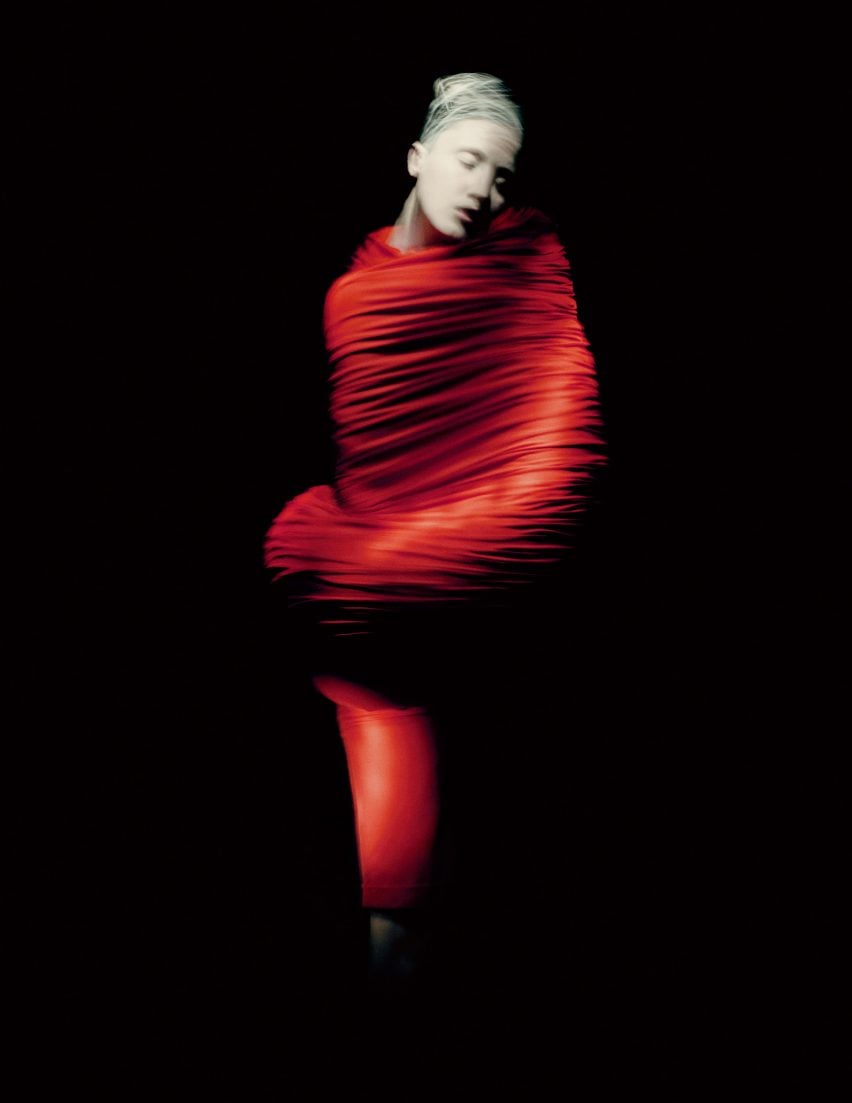 "Fashion is indelibly connected to time," said Wendy Yu, curator in charge of The Costume Institute. "It not only reflects and represents the spirit of the times, but it also changes and develops with the times, serving as an especially sensitive and accurate timepiece. Through a series of chronologies, the exhibition will use the concept of duration to analyse the temporal twists and turns of fashion history." About Time: Fashion and Duration will be guided by the work of the French 20th-century philosopher Henri Bergson. His philosophy of la durée, or duration, conceives of time as something that cannot be divided up into minutes or hours, but should be understood in its multiplicity. His work informed modernist writers such as Virginia Woolf in her novels Mrs Dalloway and Orlando. Woolf will be one of the exhibition's "ghost narrators" as fashion is used to explore the theme of temporality, and vice versa. The exhibition catalogue will feature a new short story by Michael Cunningham, who won the Pulitzer Prize for his novel, The Hours, which drew inspiration from Mrs Dalloway. Last year the exhibition and Met Gala theme was based around the American writer Susan Sontag's 1964 essay Notes on Camp. Set against a Pepto-pink backdrop, 175 items on display next to letters, paintings and objects explored how fashion has always played with the idea of camp as defined in Sontag's seminal text. Next year's Met Gala will be 4 May 2020, when celebrities and fashion notables will take up the challenge of dressing to the theme of the exhibition. Landscape architect Miranda Brooks will devise the decor for the benefit party. About Time: Fashion and Duration will run from 7 May 2020 until September 7 2020. Images courtesy of The Met unless otherwise stated.  |
| Posted: 12 Nov 2019 04:01 PM PST The Prince of Wales is getting into the fashion business. Today, the Yoox Net-a-Porter Group announced that they are teaming up with the Prince's Foundation on a collection of men's and womenswear, set to debut next year. The partnership, which is known as the Modern Artisan Project, unites students and recent graduates from Italy and Scotland, who will together design and produce 17 pieces of men's and womenswear. Specifically, young people from the Politecnico di Milano will design the autumn/winter capsule collection, taking inspiration from both Leonardo da Vinci's works and years of data from Yoox and Net-a-Porter about customer preferences. Then, Scottish graduates working at Dumfries House, an estate that Prince Charles purchased in 2007, will manufacture the line, while receiving instruction in key industry skills that will hopefully assist them in gaining employment once the project has been completed. The two groups of trainees will also meet in both Scotland and Milan to collaborate on the product development and foster a cultural exchange. Given Prince Charles's longstanding commitment to environmental activism, it should come as no surprise that the collection will be sustainably made, and will feature natural and traceable fabrics including wool, cashmere, and silk. Profits from the line will be donated to the Prince's Foundation, which, in addition to projects like this, supports a variety of other initiatives including the restoration of historic buildings such as Bletchley Park and educational programs targeted at learners of all ages and focused on topics ranging from the instruction of traditional arts and heritage craft skills to hospitality training. "At The Prince's Foundation, we deliver education programmes to thousands of people every year inspired by the vision of HRH The Prince of Wales. Sustainability is at the heart of everything we do so we are proud to have partnered with Yoox Net-a-Porter Group to deliver this truly innovative training programme," Jacqueline Farrell, the education director for the Prince's Foundation at Dumfries House, said in a statement. "This project is the culmination of our Future Textiles initiative which starts by giving school pupils an introduction to the textile industry and goes right through to the Modern Artisan project which offers an inspiring progression route to any young person wishing to enter the fashion and textile industry."  For those hoping to pick up a piece from the line, mark your calendars for mid-2020, when the entire collection will become available across all four of the Yoox Net-a-Porter brands (Yoox, Net-a-Porter, Mr Porter, and the Outnet). "Designed in Italy and crafted in the U.K., the Modern Artisan collection will be an important expression of how talent and technology can work across boundaries and borders," said Yoox Net-a-Porter Group chairman and chief executive officer, Federico Marchetti in a press release announcing the initiative. "This project, part of a long-term partnership between Yoox Net-a-Porter and the Prince's Foundation, will help equip a new generation of skilled men and women to fuse traditional craft with digitally-infused creativity–and, importantly, to do so sustainably, following the example of HRH The Prince of Wales who has dedicated the last 40 years to building a more sustainable future."  |
| You are subscribed to email updates from "fashion" - Google News. To stop receiving these emails, you may unsubscribe now. | Email delivery powered by Google |
| Google, 1600 Amphitheatre Parkway, Mountain View, CA 94043, United States | |


0 Yorumlar